The half swing: Throw darts on the green!
Finally the half swing, you might say! Now you’ll be able to approach the green from the fairway with any club. However, before you switch to the half swing, make sure you have mastered the shorter swings: putt, chip and pitch. If you don’t, you’re headed for disaster, because all the bad bends that go uncorrected will become bad habits that will cause you to plateau. You’ll be trapped in the rut you’ve created by skipping steps.
Devote 80% of your practice time to the short game: putt, chip and pitch. And pay particular attention to the pitch, and especially the long pitch, because it is this technique that will slowly but surely lead you to the half swing. You will see: the quality of your short game will be reflected in your half swing and your long game.
What exactly is a Half Swing?
The half swing is a long game swing of medium intensity and that sends the ball directly to the green, where it should come to rest.
The length of the backswing of a half swing
Strictly speaking, the backswing of a half swing should stop at the point where the lead arm is parallel to the ground. This is what I call the L to L Half Swing, which I explain more fully later in this article.
However, you can lengthen the half swing and consider it a shortened version of the full swing. In other words, turn your pelvis and shoulders generously, allowing the lead arm to extend beyond parallel to the ground, but without forcing the note. Stop your backswing as soon as you feel too stretched or about to lose your balance.
You lack balance? Follow the recommendations that I outline in another article.
Do you lack flexibility? Do, in the comfort of your own home, the easy exercises that I recommend. Also, do the Shy Pink Flamingo exercise, below, as a warm-up before a round of golf.
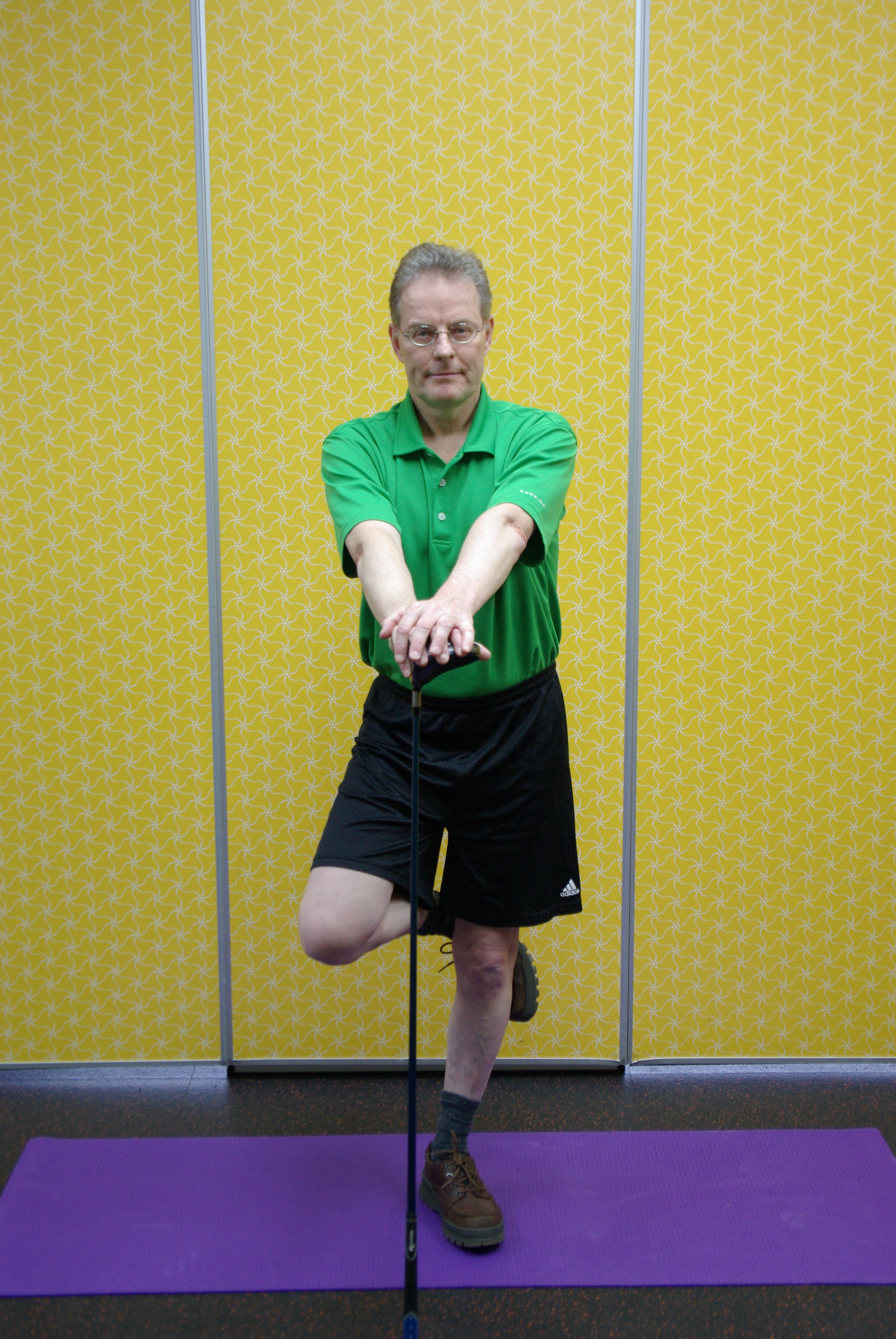
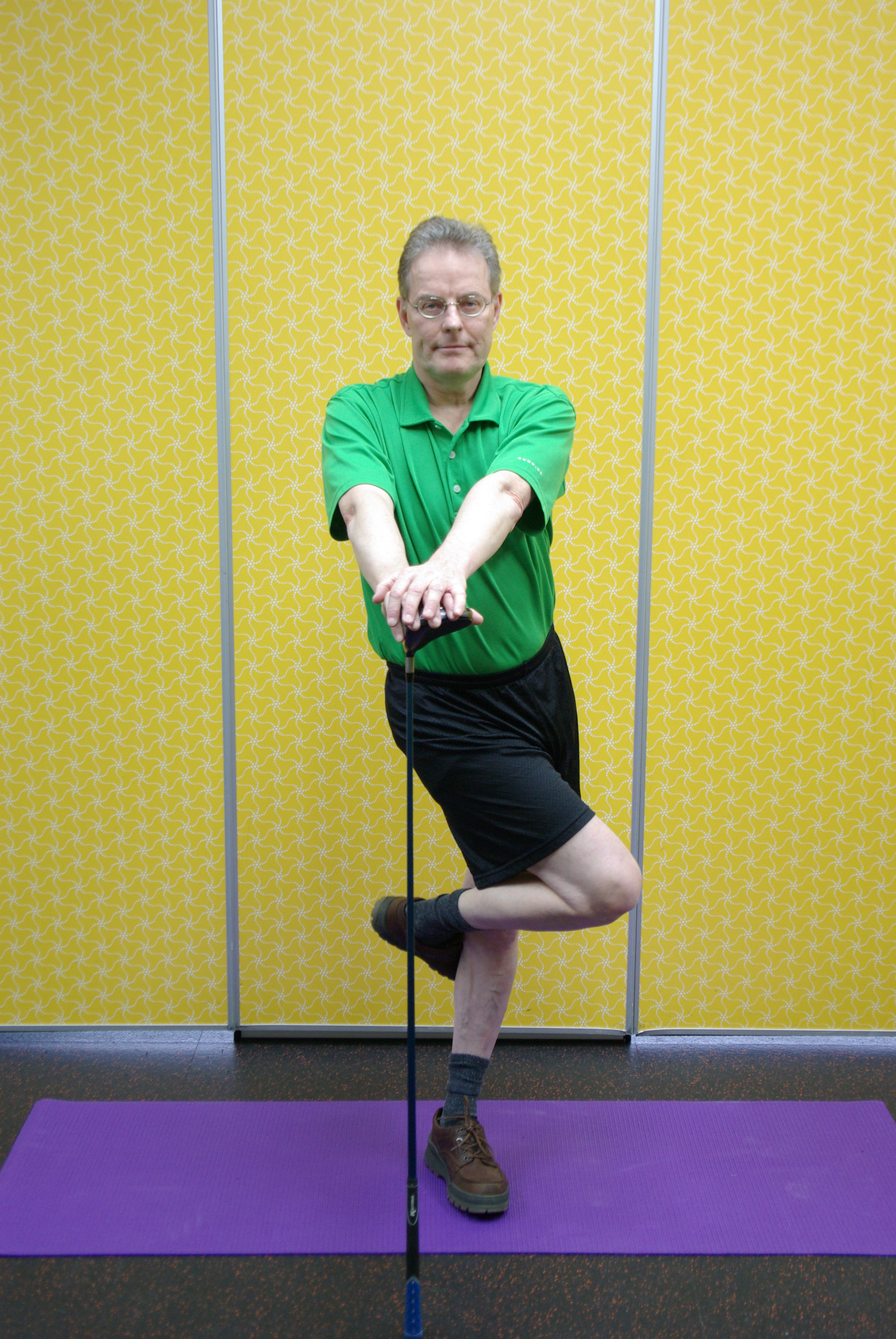
The Shy Pink Flamingo: better balance and more flexibility in one exercise!
With one foot behind the opposite knee, do hip rotations without turning your shoulders. You can support your upper body with an inverted wood. If your balance is good, hold the club horizontally in front of you at chest height and do the pelvic rotations without moving the torso or the club. The foot on the ground should remain planted without wobbling. This exercise will quickly improve your balance and, therefore, the consistency of your golf shots.
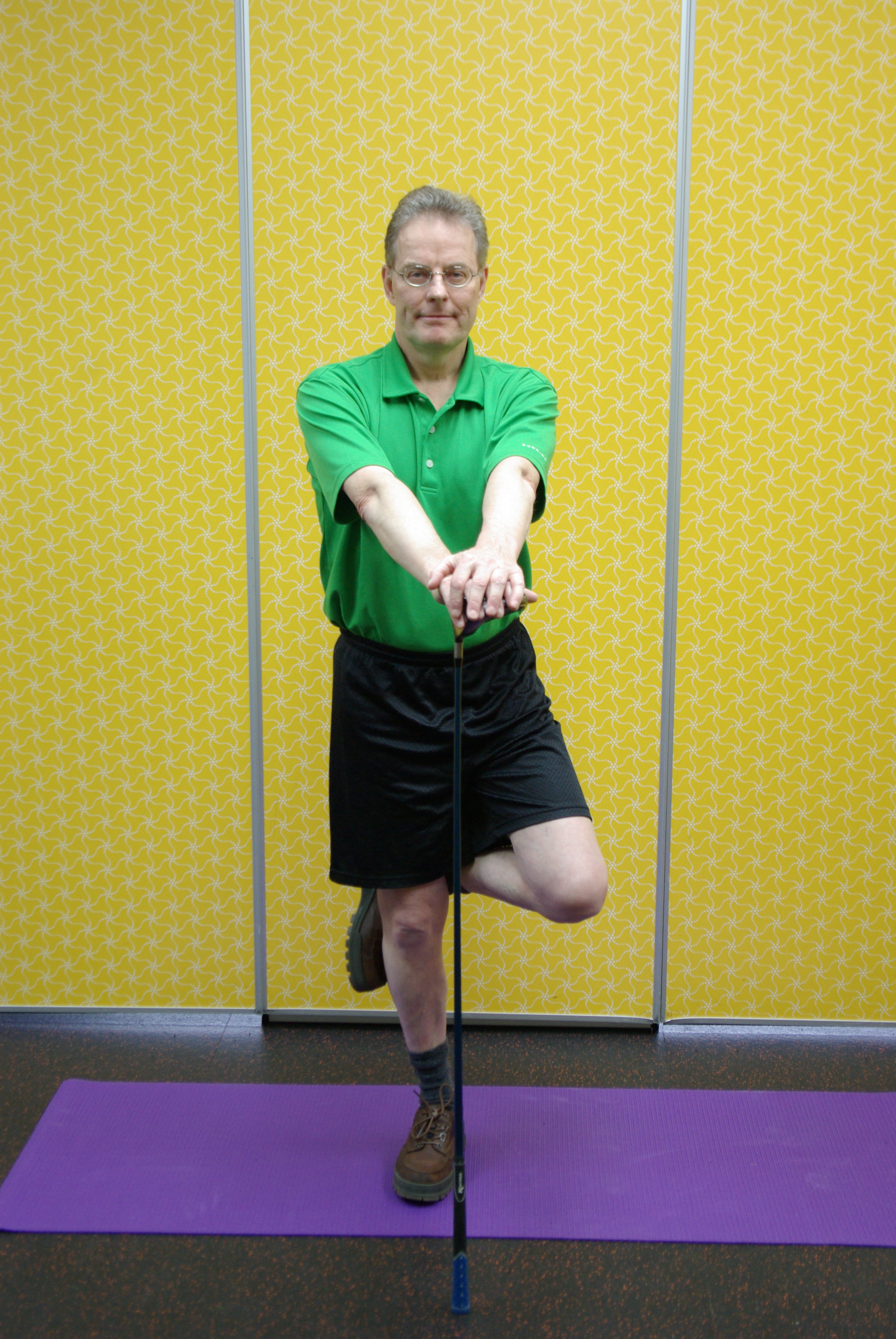
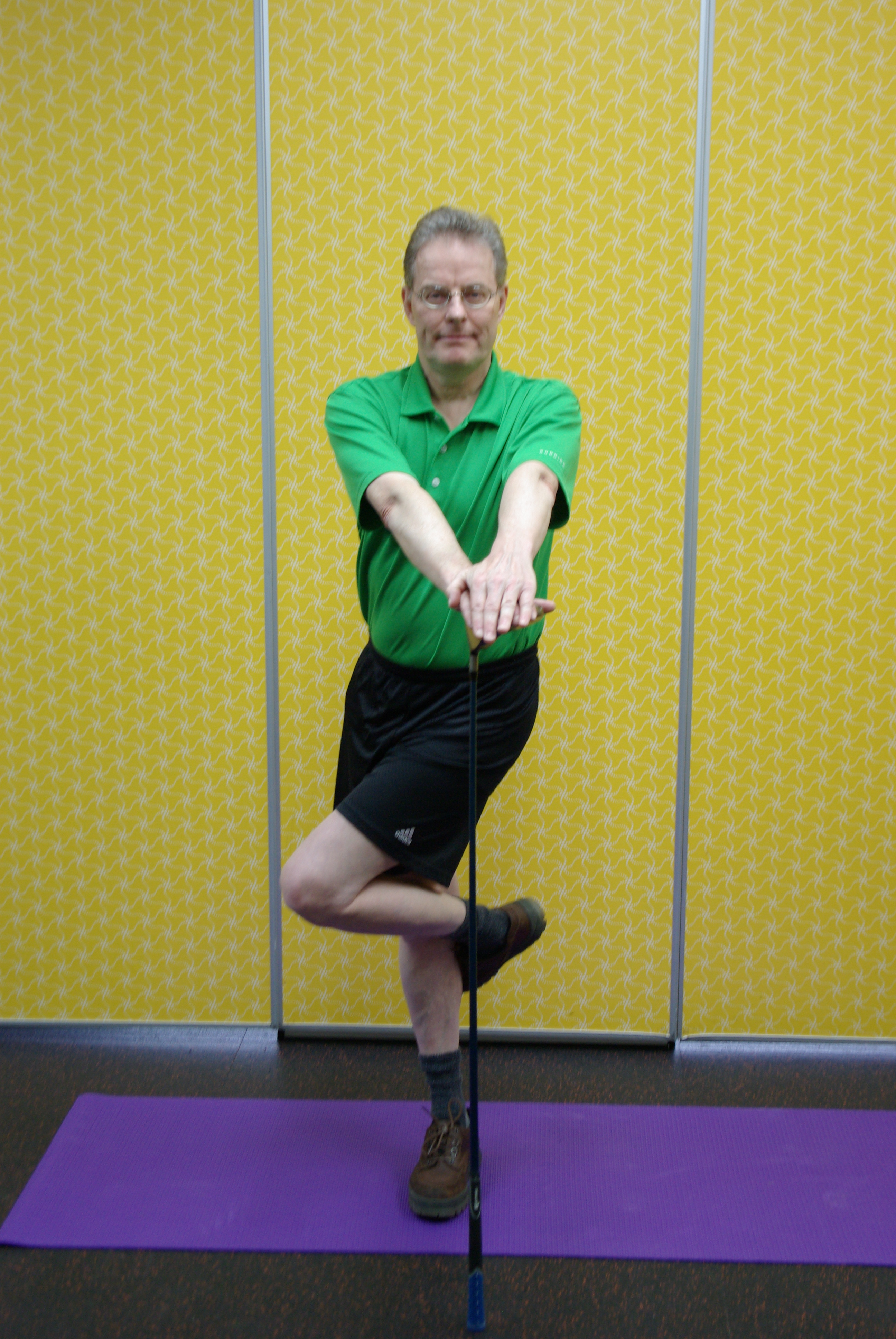
The L to L Half Swing
The Foundation before technique
Before trying to fix a movement, many golfers benefit from clarifying what belongs to the mind, the body, and the motion itself.
That is exactly the role of The Socle – The Golfer’s mental and physical Foundation.
A necessary first step, calmly established, to put things back in the right order before any technical work.